Top Live Streaming Platforms Compared
A side-by-side comparison of Twitch, YouTube Live, Kick, TikTok Live, Bigo Live and YouNow, with monetization, audience and discovery explained.
Live streaming has become one of the most direct ways to build an audience online. Instead of hoping a post travels far, you go live, talk to the people who show up, and earn from the ones who stay. That shift has turned streaming into a genuine career path for gamers, musicians, teachers, sellers, and everyday creators who simply enjoy the conversation.
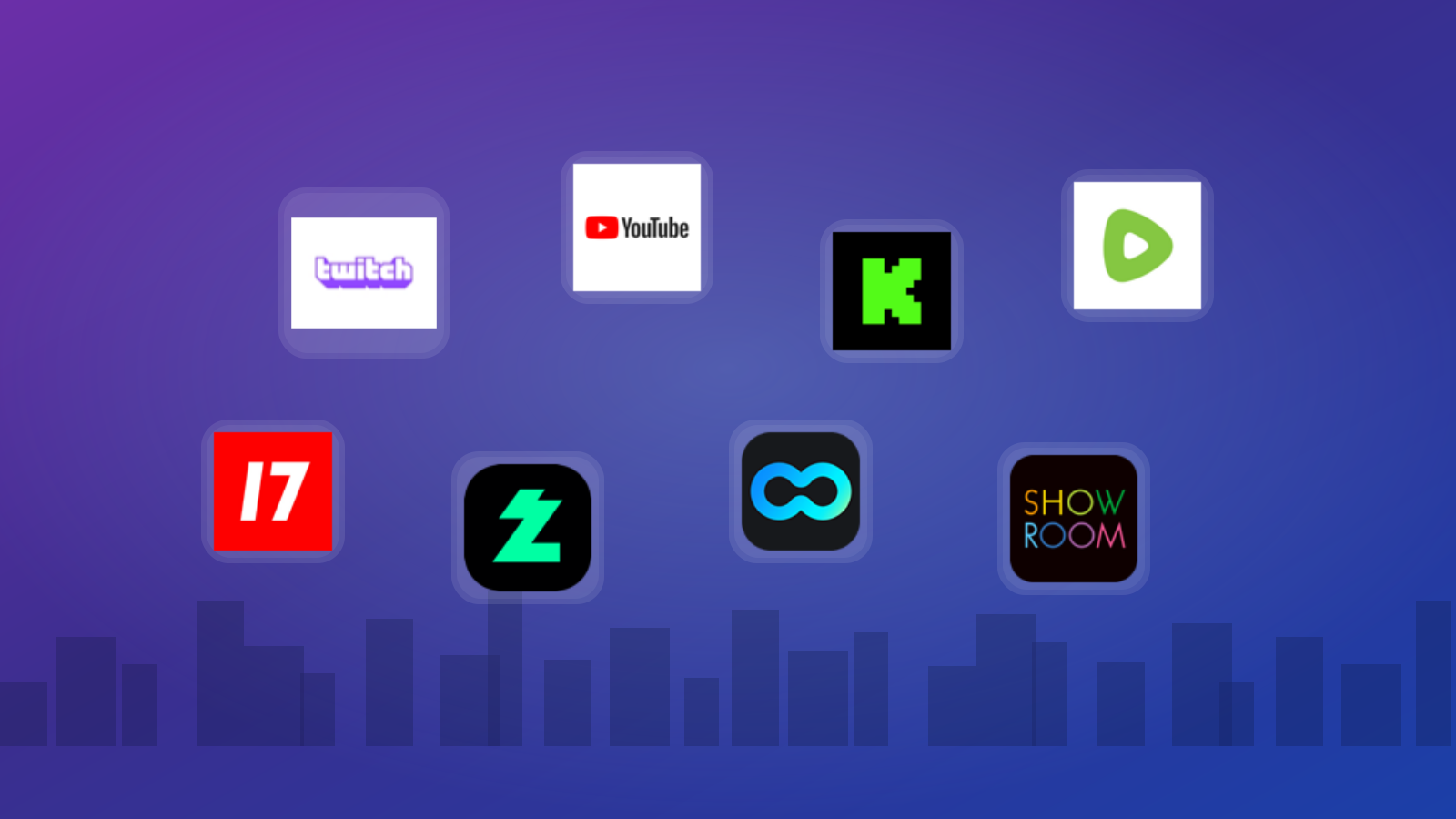
This comparison looks at the six live streaming platforms that most creators weigh up in 2026: Twitch, YouTube Live, Kick, TikTok Live, Bigo Live, and YouNow. We judge them on the things that really decide whether you grow, namely audience, monetization, discovery, stream quality, and the tools you get for free. We also flag the smaller alternatives, such as Trovo, Rumble, Uplive, and Nimo TV, that are worth knowing about. Rumble has its own site at rumble.com.
If you are starting from nothing, the practical answer is usually two platforms rather than one: a home platform where your regulars gather, and a second one used to pull in new viewers. The sections below walk through both choices. If you want the wider picture first, our 2026 social platform trends round-up covers where the market is heading.
Key Takeaways
- Twitch still leads for gaming and community, but discovery favors channels that already have traction.
- YouTube Live offers the strongest search-driven discovery and the broadest audience.
- Kick competes on revenue share rather than reach, so expect a smaller but loyal crowd.
- TikTok Live and Bigo Live are the strongest options for mobile, social, and shopping streams.
- YouNow suits conversation-first creators who value interaction more than audience size.
Key Factors to Compare
Before you compare brand names, compare what each platform actually gives you. In practice, six factors decide most of the outcome, and they rarely point to the same winner.
- Audience size and reach: how many viewers are online, and how many of them browse beyond the biggest categories.
- Monetization: subscriptions, virtual gifts, tips, ads, and how much of every dollar reaches you.
- Discovery: whether the platform actively promotes new channels or mainly rewards channels that are already large.
- Stream quality and latency: maximum resolution and bitrate, plus how quickly chat reacts to what you do.
- Community tools: moderation, emotes, channel points, clips, and the analytics you can study.
- Requirements: follower counts, age rules, and the terms you must accept before you can earn.
Live Streaming Platforms at a Glance
The table below is a starting point, not a verdict. Every platform in it can support a full-time career; they simply reward different strengths. Revenue splits, gifting rates, and payout rules change often, so treat the figures as a snapshot. The Streamlabs and Hatchet live streaming report tracks how quickly the wider market moves, and it is a useful reality check on any number you read here.
| Platform | Audience | Monetization | Best for | Notable feature |
|---|---|---|---|---|
| Twitch | Large and gaming-focused | Subscriptions, Bits, ads | Gaming and community | Deep chat, emotes and channel points |
| YouTube Live | Broad and search-driven | Ads, Super Chat, memberships | Reach and non-gaming content | Discovery through search and recommendations |
| Kick | Smaller but fast-growing | Subscriptions with a large creator share | Streamers chasing better economics | Creator-friendly revenue split |
| TikTok Live | Huge and mobile-first | Gifts, live subscriptions, shopping | Social and shopping streams | Live gifting connected to short video |
| Bigo Live | Mobile social, strong in Asia and the Middle East | Virtual gifts and agency payouts | Casual social and one-to-one chat | Talent show and gifting formats |
| YouNow | Smaller but engaged | Virtual props and tips | Conversation and interaction | Real-time viewer participation |
The table covers dedicated streaming services, but two social apps also carry live video: Facebook Live and Instagram Live. Both let you broadcast to an audience you have already built, and both install from the official Facebook app listing and the official Instagram listing.
Platform by Platform
Each platform below has a distinct centre of gravity. Rather than ranking them, the notes focus on what each one does better than the rest and the kind of creator it tends to suit.
Twitch
Twitch is still the default home of live gaming. Its culture is built around long sessions, tight-knit communities, and a chat that behaves like a room full of regulars rather than a comment section. Monetization is mature: subscriptions, Bits, and advertising, with an affiliate programme that most consistent streamers eventually reach. The requirements are modest, and they are published in the official affiliate onboarding guide. You can browse channels or start one at twitch.tv.
The trade-off is discovery. Twitch concentrates viewers in a handful of very large categories, so a new channel can spend months near the bottom of a long list. Creators who grow quickly here usually arrive with an audience from somewhere else, or they stream a niche small enough to stand out in.
YouTube Live
YouTube Live inherits the largest content audience on the internet, and it is the only major platform where search and recommendations routinely deliver viewers to a channel nobody has heard of yet. That makes it the natural choice for tutorials, talk shows, music, fitness, worship, and almost anything that is not competitive gaming. Its live side runs through youtube.com, alongside the recorded catalogue.
Earnings come from advertising, Super Chat, Super Stickers, and channel memberships. The monetization thresholds are published by Google and rarely change, and once a channel passes them the income tends to compound with the back catalogue of videos. The trade-off is patience: YouTube seldom produces overnight live success.
Kick
Kick launched as a direct challenge to Twitch and competes mostly on economics. Its headline promise is a subscription split that leaves the creator with the large majority of every subscription, far more generous than the long-standing industry norm. The platform also takes a lighter approach to some content rules, which has attracted both streamers and controversy.
The audience is smaller, so a higher percentage applies to a smaller base. Even so, for creators who already have a following and can bring viewers with them, Kick is often worth running alongside a main channel. Its official help centre documents the current revenue terms and payout process. The platform itself is at kick.com.
TikTok Live
TikTok Live turns the short-video feed into a live audience. The platform is mobile-first, the streams are casual, and viewers arrive through the same recommendation system that drives the main feed. That makes it unusually effective for reaction streams, talent, cooking, beauty, and live shopping.
Monetization runs on virtual gifts, live subscriptions, and commerce. Gifts are the core: viewers buy coins, send gifts, and the creator receives a share of the value. Because the audience skews mobile and young, TikTok Live rewards frequency and improvisation more than production value. The app installs from the official TikTok listing.
Bigo Live
Bigo Live is built for social streaming on a phone. It combines live video with gifting, level systems, and one-to-one interaction, and it is genuinely strong in markets where mobile social streaming is the norm, particularly across Southeast Asia, South Asia, and the Middle East.
Creators earn through virtual gifts and, in many cases, through agencies that manage talent and take a cut. The mood is closer to a variety show than to a gaming channel: conversation, music, competitions, and viewer participation carry the stream. If your audience lives on a phone, Bigo Live deserves a serious look. The app itself is at bigo.tv.
YouNow
YouNow is the smallest platform in this comparison and the most focused. It is built around real-time interaction between the creator and the audience rather than around scale, and its community is closer to a regular hangout than a broadcast. Virtual props and tips provide the revenue.
For creators who enjoy the conversation more than the numbers, that model can be refreshing. For creators chasing reach it will feel limiting, and most people use YouNow as a second platform rather than a first.
How to Choose the Right Platform
Work backwards from the money and the audience you already have, rather than from the platform with the best headline.
- Choose Twitch if you stream games, want a deep community, and can commit to a fixed schedule.
- Choose YouTube Live if your content works as search, or you already publish videos there.
- Choose Kick if you have an audience you can bring with you and you care about revenue share.
- Choose TikTok Live if you are comfortable on camera, post short video, or sell products.
- Choose Bigo Live if your viewers are mobile, social, and gift-oriented.
- Choose YouNow if conversation and interaction are the whole point of your stream.
If two platforms are close, start with the one where you already have an account and a few followers, because distribution beats features early on. You can also browse our live streaming category to compare the services we track before you commit. If you are drawn to one-to-one conversation rather than broadcasting, our 1v1 video chat category covers that ground, and Yubo is another social-first option for live video. The group chat category is the place to look if your audience gathers in rooms rather than on one channel.
Monetization and Revenue Share
Money arrives differently on every platform, and the difference matters more than most new streamers expect.
- Subscriptions are the most predictable income, but the split between creator and platform varies widely.
- Virtual gifts and tips pay per event rather than per month, so income swings with your schedule.
- Advertising scales with watch time and usually rewards long, steady sessions.
- Memberships and channel perks convert loyal viewers into recurring income.
- Brand deals and commerce often outgrow platform payouts once a channel has a clear niche.
None of these pay well at the very beginning, and that is normal. Treat the first months as building the audience that the revenue will eventually follow.
Getting Started as a New Streamer
- Pick one platform as your home and one as your second, then commit to a schedule you can keep for three months.
- Set a realistic technical baseline: a stable connection, a decent microphone, and lighting that makes your face easy to see.
- Write a short description and choose a name people can spell, then use the same handle everywhere.
- Stream at the same times each week so your regulars know when to come back.
- Review your analytics monthly and change one thing at a time.
Before your first broadcast, it is worth reading our social media safety tips, which cover the moderation and privacy settings that matter most on live video.
Conclusion
There is no single best live streaming platform, only the best match for your content and your audience. Twitch remains the strongest choice for gaming and community, YouTube Live wins on discovery and reach, and Kick competes on how much of the revenue reaches the creator. TikTok Live and Bigo Live are the natural homes for mobile, social, and shopping streams, while YouNow rewards creators who put conversation first.
Pick your home platform, show up consistently, and revisit this comparison in six months with real data in hand. The platform matters far less than the habit of going live.
Frequently asked questions
Which live streaming platform is best for beginners?
YouTube Live is usually the easiest start because search and recommendations can bring viewers to a channel with no following. Twitch is the better choice if you stream games and want a community around your channel.
Which platform pays the highest share of revenue?
Kick is known for leaving creators the large majority of subscription revenue, which is far more generous than the industry norm. Check the official terms, because payout rules and rates change over time.
Can I stream on more than one platform at once?
Yes. Many creators run a main channel and mirror the stream elsewhere. Check each platform agreement first, because some restrict simulcasting and exclusive contracts can forbid it.
Do I need a large following to earn money?
Not necessarily. Gifting and tipping platforms such as TikTok Live and Bigo Live can pay a small but engaged audience. Subscriptions and advertising usually need a bigger, steadier audience.
Which platform is best for mobile only streamers?
TikTok Live and Bigo Live are built for phones and reward frequent, casual broadcasts. YouNow also works well on mobile if conversation matters more to you than audience size.
How long does it take to grow a live streaming channel?
Most channels need six to twelve months of consistent streaming before income becomes meaningful. A fixed schedule and a clear niche matter more than expensive equipment.